Changing the way cryptocurrency is exchanged around the world.
XcelR has been around since 2018. In October 2026 its network started over from a new genesis block, this time with hidden amounts and ring signatures from block 1. There's no premine, no coin sale, and no dev fee. It's new and small, so see what the privacy covers before you count on it.
- Amounts: hidden
- Ring size: 16
- Mining: RandomX
- Blocks: 2 min
What XcelR is
The mission, since 2018 Our aim is to help businesses, companies, and everyday people buy and use cryptocurrency more fluidly and efficiently, with little to no friction.
XcelR is a cryptocurrency with its own peer-to-peer network. The project goes back to 2018. The chain you can use today started from a new genesis block in October 2026.
Nothing from before carries over. That covers the 2018 and 2021 networks, and also a chain that ran for seven blocks from October 1, 2026, on early rules with public amounts. It was replaced before any public use. Here's the whole history.
Today you can run the XcelR node, use the command-line wallet, mine solo, and look things up in the block explorer. A desktop wallet is in the works; once there's a build for your system, it will be on the downloads page.
It's small. There's one seed node and very little hash rate, so if you run a node now, you're a real part of the network.
Since 2018
XcelR went public in 2018. Three networks came before the one running today, and none of their coins exist on it.
Today's chain is a fresh start. Coins from the 2018 and 2021 XcelR networks, and from the seven-block chain of October 1, 2026, don't carry over. It has no premine, no coin sale, and no dev fee.
Specs
All of this is fixed in release 0.2.0.0. Changing any of it would take a new release that node operators choose to run.
- Launch
- , from a new genesis block Genesis hash 5e196c370d4555eef1968182c913ae45dd6271a62db4c07730e682884aaaa32c
- Ticker
- XCL, 12 decimal places
- Release
- 0.2.0.0 "Genesis", under the BSD 3-Clause license The 2026 source code isn't published yet.
- Rules
- Version 16, from block 1 The genesis block is created under version 1 rules, as on every chain of this design. No other block uses them.
- Proof of work
- RandomX Designed to run well on ordinary CPUs.
- Block time
- A 2-minute target Difficulty is recalculated for every block to keep the average close to it.
- Mined coins unlock
- After 60 blocks About two hours.
- Amounts
- Hidden, with RingCT and Bulletproofs+ range proofs The fee is public, and so are block rewards.
- Ring signatures
- CLSAG, 16 members The output being spent hides among 15 others.
- Addresses
- Prefix 973; standard addresses start with
bJIntegrated 974, subaddress 975. Payments go to one-time addresses with view tags. - Ports
- P2P 28880, RPC 28881, ZMQ 28882 RPC and ZMQ listen on 127.0.0.1 only by default.
- Block reward
- 35.184338534400 XCL for block 1, then a little less with every block No halvings. Each reward is (264 − 1 − coins already generated) >> 19 atomic units, and 1 XCL is 1012 atomic units.
- Main emission
- About 18.13 million XCL, done at block 2,134,600 About 8.1 years at 2-minute blocks.
- Tail emission
- 0.6 XCL per block after that, permanently So there's no hard cap.
- Genesis output
- 17.592186044415 XCL, to a key nobody can spend A "nothing up my sleeve" key: it's derived from a public label, so nobody can know its private key.
- Premine, coin sale, dev fee
- None Apart from the genesis output, every XCL comes from mining.
- Seed node
seeds.xcelr.org:28880, built into the binaries It's the only one for now.- Mining
- Solo, through your own node No pools; P2Pool isn't supported.
Emission
Each block pays its miner a little less than the one before, until the reward reaches a floor of 0.6 XCL and stays there. Your browser works out these charts from the rules in release 0.2.0.0. They show the schedule, not a forecast.
// Emission simulator
ComputedYears of chain time, at one block every 2 minutes
- Chain time
- –at the target block interval
- Rules in force
- –
- Block reward
- –
- Supply after this block
- –
- Calendar estimate
- –estimate: assumes every block from now on arrives on target
Show the schedule as a table
| Milestone | Block height | Chain time | Reward per block (XCL) | Total supply (XCL) |
|---|---|---|---|---|
| Computed when the simulator loads. | ||||
What XcelR hides, and what it doesn't
From block 1, every transaction follows the same privacy rules. Here's what they hide, and where a chain this young still falls short.
Hidden on the chain
- Amounts
- Every transfer hides its amounts with RingCT, and a Bulletproofs+ range proof shows each one is valid without revealing it. Only the fee is public. Block rewards are public too, which is how anyone can check the emission.
- Which coin you spent
- Each input carries a CLSAG ring signature over 16 outputs: the one you're spending and 15 others from the chain. Anyone can verify the signature, but not tell which of the 16 was spent.
- Your address
- Every payment goes to a one-time address, so your wallet address never appears on the chain. Finding the payments that are yours takes your view key. View tags let a wallet skip most outputs that aren't its own, which makes scanning faster.
Weak spots today
- Few decoys
- Your wallet picks the 15 decoys from outputs already on the chain. A young chain has few, and most of them are mining rewards, so early rings give less cover than later ones will. Anyone who owns outputs in your ring knows those aren't the one being spent, and at launch that includes the project, which mines from block 1.
- Your IP address
- The coin doesn't hide it. The nodes you connect to can see it, and so can the seed node when your node first joins. If that matters to you, connect through a VPN or Tor.
- One seed node
- New nodes find the network through
seeds.xcelr.org, which the project runs. If it's down, a new node can't join until you give it a peer with--add-peer. - No outside review
- The 2026 source code isn't published yet, and nobody outside the project has audited it.
Put together: the chain doesn't show your balance or your address, and following coins is harder than on a transparent coin. That isn't the same as being anonymous. If being identified could hurt you, don't rely on XcelR yet.
Get started
These steps use the Linux x86_64 build of the command-line node (xcelrd)
and wallet (xcelr-wallet-cli). For other systems, check the
downloads page.
There's no public node. Your wallet talks to your own xcelrd,
running on the same machine.
-
Download and check it
$ curl -LO https://xcelr.org/downloads/xcelr-0.2.0.0-linux-x86_64.tar.bz2
$ curl -LO https://xcelr.org/downloads/SHA256SUMS
$ sha256sum --check --ignore-missing SHA256SUMS
$ tar xjf xcelr-0.2.0.0-linux-x86_64.tar.bz2
$ cd xcelr-0.2.0.0-linux-x86_64
The binaries and the checksum file aren't signed yet. A matching checksum shows your download is the file this server publishes; it can't show who built it. The downloads page can also check a file in your browser.
-
Run the node
$ ./xcelrdOn first run it creates
~/.xcelrand connects toseeds.xcelr.orgon port 28880. Leave it running in its own terminal, and typestatusto see the height and your peers. To let other nodes connect to you, allow inbound TCP 28880. RPC stays on127.0.0.1:28881, so only your machine can reach it. For more options, try the node command builder. -
Create a wallet
$ ./xcelr-wallet-cli --generate-new-wallet mywalletIt asks for a password and a seed language, then shows a 25-word seed phrase. Write that down somewhere offline: it's the only way to restore the wallet. Type
addressto print your address (it starts withbJ). The wallet connects to127.0.0.1:28881by default; add--daemon-address 127.0.0.1:28881if you want to be explicit. -
Mine
# typed into the running xcelrd terminal
> start_mining YOUR_ADDRESS 2
> stop_mining

# or start the node already mining
$ ./xcelrd --start-mining YOUR_ADDRESS --mining-threads 2
The
2is the number of CPU threads. Mining is solo: a block you find pays its reward to your address, and that reward unlocks after 60 blocks, about two hours. There are no pools. Ifstart_miningrepliesBUSY, your node hasn't synced with a peer yet; wait untilstatussays it's synchronized. The mining estimator shows how long a block takes on average at the current difficulty.
Tools
A mining estimator and a node command builder. Nothing you type here leaves your browser.
// Mining estimator
Needs JavaScript| Within | Time | Chance |
|---|---|---|
| The average time | – | 63% |
| Twice the average | – | 86% |
| Three times the average | – | 95% |
These are averages, not a schedule. Finding a block is random, so a real wait can be much shorter or much longer. Difficulty is recalculated for every block, so the numbers move as miners join or leave. The network hash rate is an estimate: difficulty ÷ block target.
// Node command builder
xcelrd 0.2.0.0./xcelrd- With no options,
xcelrduses its defaults and connects through the built-in seed node.
Every option was checked against xcelrd --help in release 0.2.0.0. Run the command from the folder that contains xcelrd.
The original vision
What the project set out to build when it started in 2018.
This is the 2018 plan. None of it is part of today's release, and there are no dates for any of it.
-
2018 plan
XcelR Platform
One place to trade on more than a dozen exchanges, with payments and trading tools built in.
-
2018 plan
Cryptocurrency kiosks
The 2018 roadmap had a kiosk rollout starting in January 2019.
-
2018 plan
Mobile wallets
Wallet apps for Android and iPhone were announced in 2018.
-
2018 prototypes
CEL air-gapped hardware wallet
Two prototypes were built in 2018: V1 on an Arduino Nano with an OLED screen, and V2 with a 2.5-inch touch screen on an Arduino Leonardo.
2018 archive
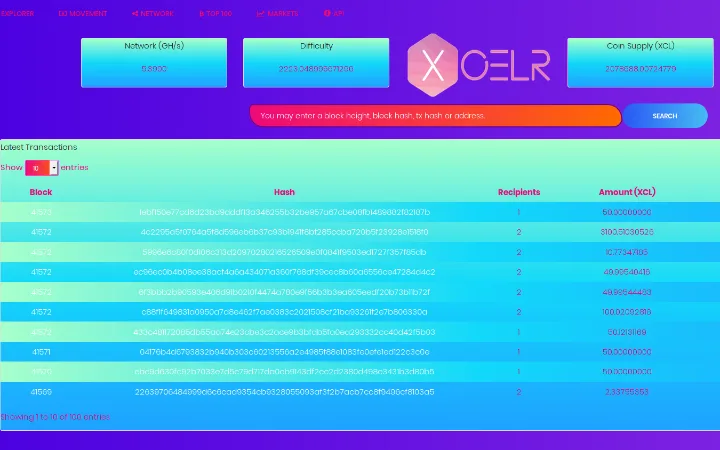
The 2018 block explorer. Cropped. 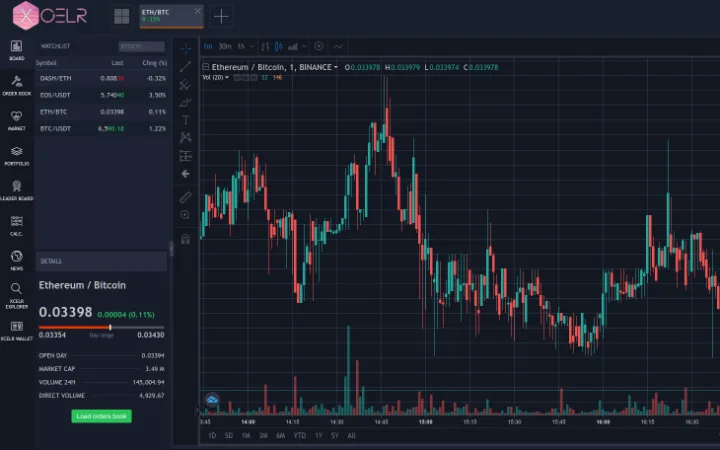
The XcelR Platform trading terminal, 2018. Cropped. 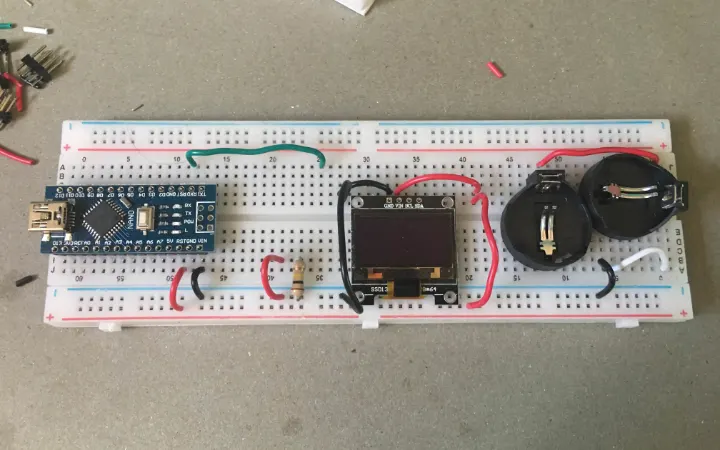
CEL wallet prototype V1: Arduino Nano and OLED screen. 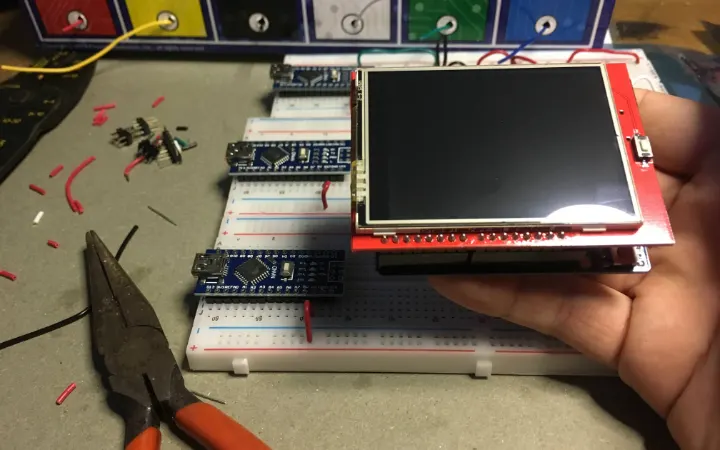
CEL wallet prototype V2: 2.5-inch touch screen on an Arduino Leonardo.
Team and contact
- Scott KaleitaFounder and lead developer
- Larisa SmithSenior National Director of Digital Marketing and Data Analysis
- Prudhvi JalliSenior Regional Director of Public Relations (Asia)
Names and titles as published on the XcelR site in 2019.
Links
The 2026 network
- Block explorerhttps://explorer.xcelr.org
- Downloadshttps://xcelr.org/downloads/
- Checksumshttps://xcelr.org/downloads/SHA256SUMS
- Network info (JSON)https://explorer.xcelr.org/api/info
- Seed nodeseeds.xcelr.org:28880
Project channels
- BitcoinTalk announcementbitcointalk.org, July 28, 2018 (opens in a new tab)
- LinkedInlinkedin.com/company/xcelr (opens in a new tab)
- Facebookfacebook.com/xcelrcoin (opens in a new tab)
- 2018 promo videoyoutube.com/watch?v=OKyG8dpDVSk (opens in a new tab)
- GitHub: earlier code (2018 to 2021)github.com/xcelrThe 2026 source isn't published there yet. (opens in a new tab)